
Want to know where the fall colors are peaking around the Twin Cities and Minnesota?
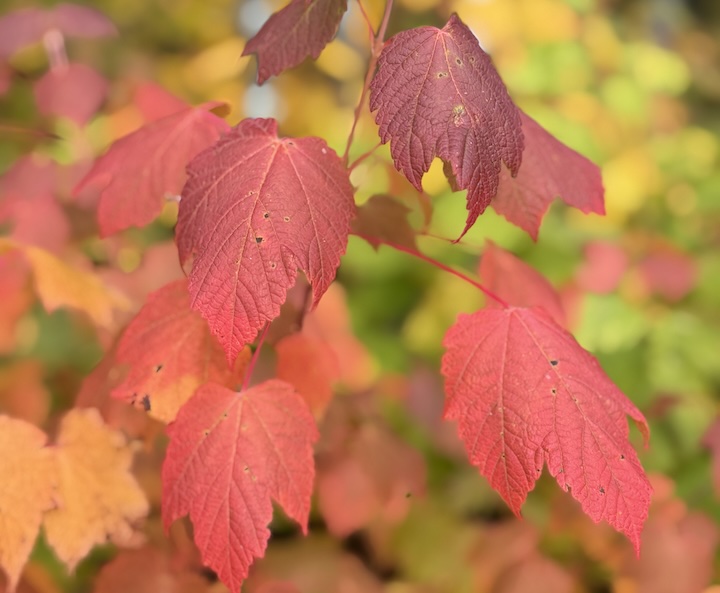
The Minnesota DNR Fall Color Finder is the best tool we know of for tracking fall color across the state. The interactive map shows the progression of fall color each year, and includes reports from individual state parks and recreation areas.
The best part is that you can use it to help decide where and when to go hiking, biking, paddling or camping to see the best fall colors.
Here’s how the MN Fall Color Finder works, and a few things you’ll want to know before planning your next autumn outdoor adventure…
What Is the Minnesota Fall Color Finder?
The Fall Color Finder is an interactive map that shows the progression of fall color across Minnesota.
The map is especially useful because peak fall color doesn’t happen across the state at the same time. Typically, the leaves change from mid-late September through mid-late October, with peak lasting about a week in any given area. There are general trends—like north to south—but even those vary from week-to-week and year-to-year.
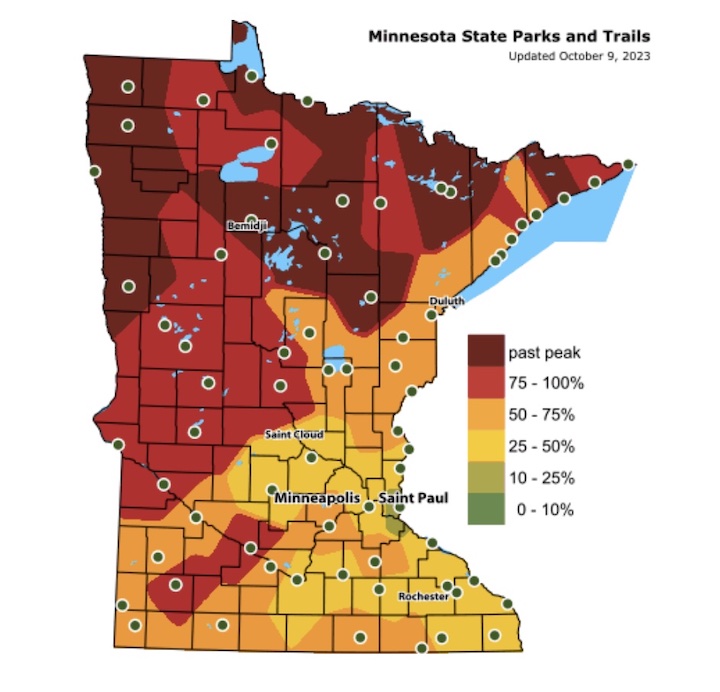
This map is super helpful because the DNR updates it daily during fall color season each year. Here’s an example of the map from 2023, when much of the state was at or near peak:
How to Use the Minnesota Fall Color Finder
The map is easy to use once you understand what you’re looking at.
Check the Current Fall Color Map
The DNR’s Fall Color Map shows the current year’s actual leaf color progression through the current date. You can look around the map to see the status in different parts of Minnesota.
If you’re looking for the best location for fall color adventure this weekend, this is the part of the map you want to pay attention to. What’s happening now.
Use the Date Slider
A very useful feature, especially for a future adventure, is the date slider just below the map.
You can slide it backward to see how the colors have progressed so far—including how long they’ve been at peak in any given area. Or you can move it forward to see the typical color progression in an area you’re curious about.
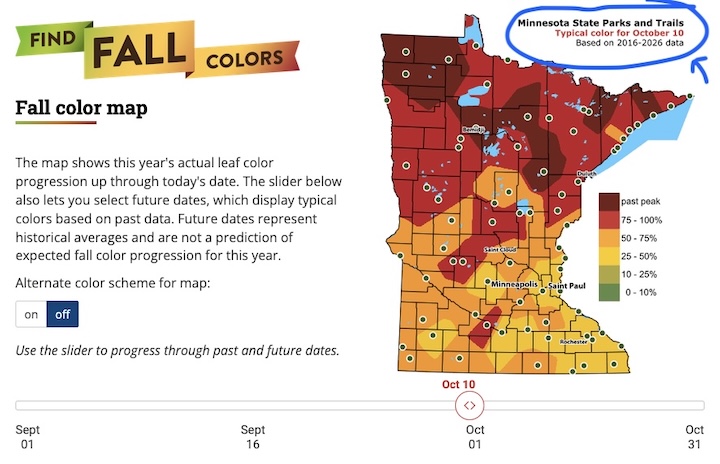
The most important distinction is that moving forward on the slider is NOT a prediction of this year’s peak color. Instead it uses past data to show what fall color usually is at that destination on that date.
Does that make sense?
Check the Latest Fall Color Conditions
Not only is this map updated daily this time of year, but you can scroll down to the Latest Conditions section to see a running list of all the state parks and recreation areas, their level of fall color peak, trail updates, and photos sent in by park visitors.
This is super helpful, especially if you want to head over to a specific park. It’s even helpful to know what the current color is like in areas close by those specific parks.
Here’s a screenshot of a few of the state park updates from one October day:
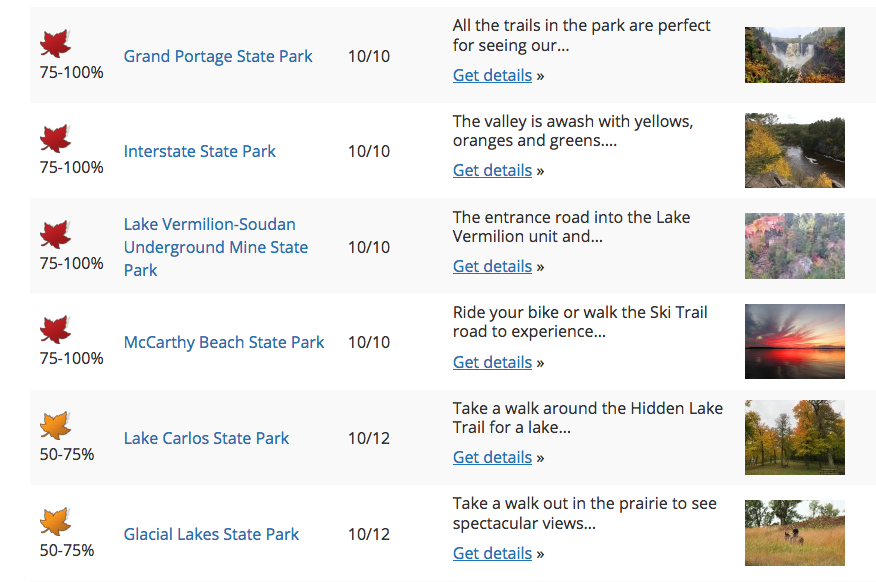
Each of the location names in blue is a live link to that park’s page. You can see exactly where it is in our state and get more details for trails, camping and more.
Click on the “Get details” link and you’ll see more photos and comments sent in by that park’s recent visitors. Some of the comments even target specific trails. It’s so helpful!
There’s also an option to choose a specific region of the state if you want to key in on just the state parks in that area.
It’s truly a wonderful collaborative effort by the DNR and Minnesota outdoor lovers.
Is the Fall Color Finder a Fall Color Forecast?
No, not exactly.
This is one of the easiest things to misunderstand about the map.
Here’s an example: Today, as I’m writing this, it’s September 21st (2026). Today’s map gives current color all across the state.
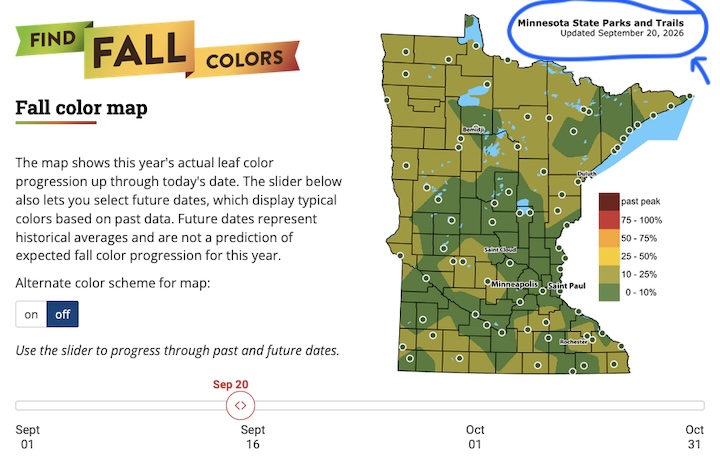
But when I move it to October 10th, you can see on the top right that it’s now showing expected color based on historical data:
To see just how varied our peak fall color can be, the DNR has a page to compare this year with the past two years.
What Makes Minnesota Fall Colors Change?
This page on the DNR’s website gives us a pretty detailed explanation of why leaves change color in the fall, and when typical color happens in Minnesota.
To nerd out a bit, it has to do with four biochemicals:
- Chlorophyll—What makes leaves green through spring and summer. This breaks down in the fall, allowing the other colors to start to show up.
- Carotenoids—These are responsible for the yellows and oranges we see when the greens disappear.
- Anthocyanins—These produce the reds and purples we love so much.
- Tannins—Think “boring” (at least I do)! These are the leaves that just turn brown and fall off.
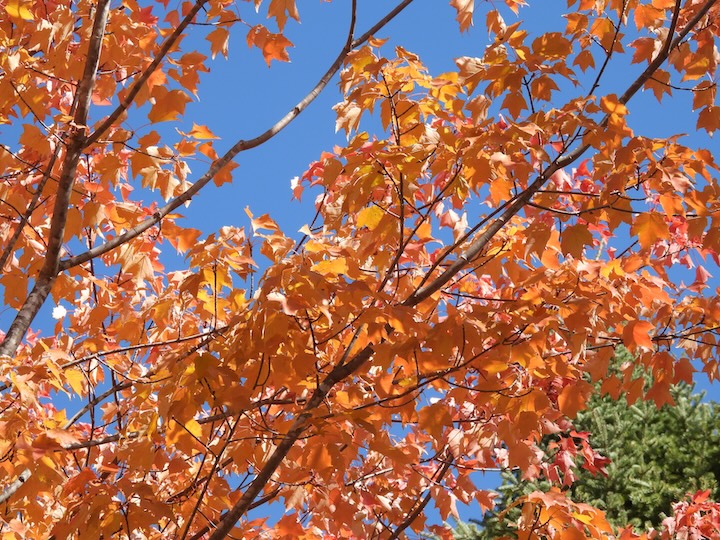
Day length and temperature are two of the biggest factors that trigger the change from summer green to fall yellow, red and orange.
And the weather plays a very important role in how brilliant the colors will be. This time of year, we want sunny days and cool nights for the best color. But summer drought or excess rain, disease, extreme temps and other stressors all can affect the timing and intensity of autumn color.
Finding Great Fall Color Near the Twin Cities
To find where color is peaking close to Minneapolis, Saint Paul and the surrounding metro, zoom in on those counties on the Fall Color Map. Check out individual state parks like Fort Snelling, Interstate and Afton.
There are plenty of scenic fall trails, campgrounds and waterways right here, which makes it possible to enjoy the leaves for more than just a weekend.
A couple blog posts to check out are:
If you can keep your schedule somewhat flexible and include evening or mid-week excursions as well as weekends, you’ll have many chances to enjoy.
The more you get out, the more you’ll discover the best color in your area. For example, one of my very first park explorations for Twin Cities Outdoors was at Elm Creek Park Reserve in October 2017. The trail my daughter and I chose was absolutely stunning! We happened to hit peak color that fall.
Planning Your Fall Color Outing
As you plan your outing(s), here are some tips:
- Check the Fall Color Map for conditions within a day or two. Fall color can change quickly, especially if it’s been windy or extra cold.
- Check the weather forecast. A lovely sunny day can make the colors especially spectacular, providing a bright blue background to those autumn leaf colors. Dress for the temps and know if rain is coming!
- Expect crowds on the weekends, especially at popular Minnesota state parks. Arrive as early as you can, both to find a parking spot and to get on the trail or waterway before the crowds. If you can avoid the weekends, great.
- If camping is on your to-do list, fall weekends are surprisingly busy, so book early—or go during the week if you have that flexibility.
Which Trees Provide the Best Color in Minnesota?
Maples are the most famous of our fall color beauties. Many of our Twin Cities’ parks are loaded with maples, so it’s not hard to find a colorful hike surrounded by their yellows, oranges and reds. They’re one of the earlier trees to turn.
Aspen and birch leaves turn bright yellow. Those are plentiful around us, too.
Oak leaves aren’t as bright—more rusty oranges and reds. They peak later than the maples, generally.
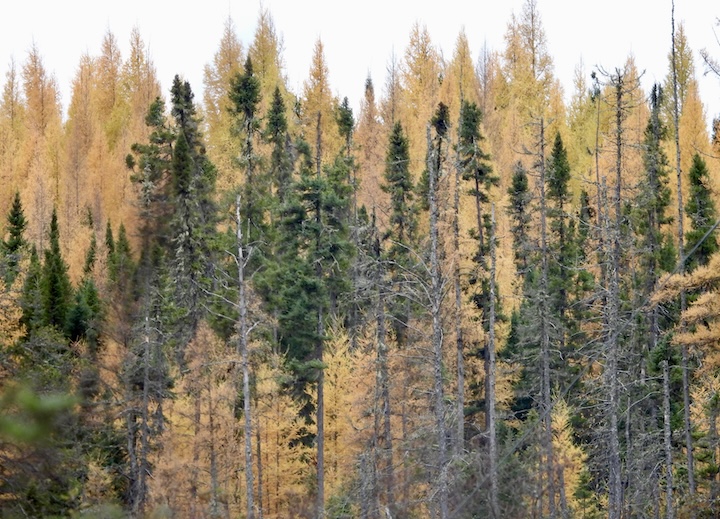
Did you know there’s a tree here in Minnesota that looks like an evergreen but doesn’t act like one? It turns bright gold and loses its needles each fall. It’s the tamarack (they’re called larch out West).
You can see in the photo below how gorgeous they look next to the dark, rich colors of the true evergreens:
Now…go find those leaves!
(This blog post was first published in 2018, and has been updated a couple of times.)
See our SHOP for our Hiking, Biking and Paddling Guides

- Minnesota Fall Color Finder: How to Use the DNR Fall Color Map - September 21, 2026
- 12 Best Fall Color Paddles in the Twin Cities - September 4, 2026
- New Winter Gear: How Do These Perform? - November 29, 2023